
Is it true?
Is it kind?
Is it necessary?
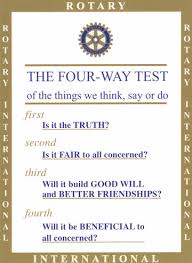
This practice/filter is attributed to many people. Experts say the Sufi poet Rumi, probably didn’t say this although you can find a snippet of a poem attributed to him, (he spoke more in poetry and metaphor than directly as these questions are stated.) Buddha did say something similar, and Indian guru Sai Baba is quoted as saying, “Before you speak, ask yourself: Is it kind, is it necessary, is it true, does it improve on the silence.”Before you speak, ask yourself: Is it kind, is it necessary, is it true, does it improve on the silence.In the Western world, the Quakers call this filter the three sieves. First seen as a story in the Children’s Story Garden, published in the 1920’s, the first of the sieves is truthfulness, then kindness, then necessity. Here is the story. THE THREE SIEVES A LITTLE boy one day ran indoors from school and called out eagerly: "Oh, mother, what do you think of Tom Jones? I have just heard that ——" "Wait a minute, my boy. Have you put what you have heard through the three sieves before you tell it to me?" "Sieves, mother! What do you mean?" "Well, the first sieve is called Truth. Is it true?" "Well, I don't really know, but Bob Brown said that Charlie told him that Tom ——" "That's very roundabout. What about the second sieve — Kindness. Is it kind?" "Kind! No, I can't say it is kind." "Now the third sieve — Necessity. Will it go through that? Must you tell this tale?" "No, mother, I need not repeat it." "Well, then, my boy, if it is not necessary, not kind, and perhaps not true, let the story die." In The Children's Story Garden. Stories collected by a committee of the Philadelphia Yearly Meeting — Anna Pettit Broomell, Emily Cooper Johnson, Elizabeth W. Collins, Alice Hall Paxson, Annie Hillborn, and Anna D. White. Illustrated by Katharine Richardson Wireman and Eugénie M. Wireman. Published in 1920 by J. B. Lippincott Company, Philadelphia. [bctt tweet="....if it is not necessary, not kind, and perhaps not true, let the story die."] There are other well-known and helpful filters. Since the 1930’s, the Rotarians have used Herbert J. Taylors Four Way Test.
Does it need to be said?
Does it need to be said by me?
Does it need to be said right now?
I cannot say that I believe that we should always be so measured and careful with our language. Certainly there are times and places to just banter, to let loose, to let language flow freely and frivolously. There are also times when a person just has to say what they need to say. Those who are grieving profoundly may say difficult, raw, vulnerable things. They may not sound kind. But they are usually true, so deeply true, and they are often hard to hear. The grieving person must speak the hard truth.
'Don't raise your voice. Improve your argument.'At this point in my life, I have added my own filtering question: Will this comment be helpful? Perhaps that is similar to Sai Baba’s filter, “Will it improve on the silence?” I can honestly tell you that I have swallowed quite a few comments when I have asked myself, “Will this really be helpful?” Twenty-nine days until the Presidential Election. (Thank you Sweet Baby Jesus!) I am reminded that politics, and elections in general, have their own set of standards and rules, although I could not tell you what they are. Insult the other candidate as much as possible? Lie repeatedly? Skirt the questions? Deflect and avoid? Perhaps you can’t be in that game and operate by civil rules such as these filters. Perhaps our candidates know nothing about helpful filters. But we should. We should know, or at least learn, how to talk with each other. We should know how to check our facts before we deliver blustery opinions as though they were truth. We can make an effort to be kind and to wonder if what we are getting ready to say is necessary. Choose whichever filter works for you. But help make this messy life more marvelous, at least in conversation, by remembering that less can be more.