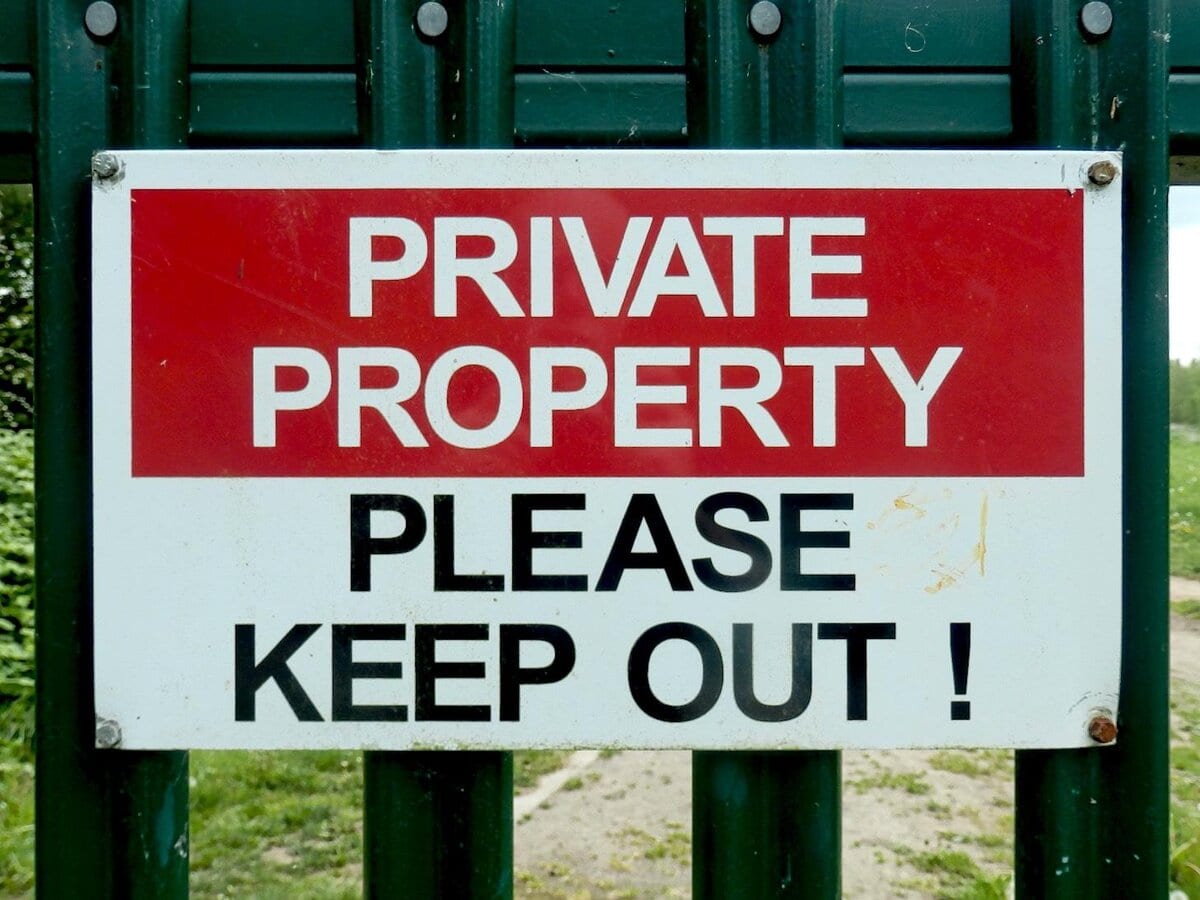
“If you can’t say “no”, your “yes” means nothing.”
One of the hallmarks of healthy relationships is healthy boundaries. This is true for relationships with your children, your parents, your co-workers, your boss, and your friends. But in terms of your love relationships, what does the word boundaries conjure for you? A boundary is nothing more than a sense of where you end and I begin. Boundaries can be very fluid, as they tend to be in people who are pleasers and in families where the rules are relaxed. Or they can be a bit rigid, a set of rules, regulations, and expectations that are rarely loosened. As in most of life, 180 degrees from sick is still sick, so either end of this continuum in a relationship could be toxic.A boundary is nothing more than a sense of where you end and I begin.I think of a boundary as an outward sign, (a look, a word, a rule, a promise, a behavior) of an inward truth. The clearer my truth, the clearer my boundary, the better you will actually know me. So good boundaries help us know each other more intimately. Good boundaries are also one of the things I not only negotiate with my partner but I negotiate with myself. How do I manage my own thoughts, feelings, time, and behaviors? For instance, I might say to myself, “I will not behave like that again.” This is an internal boundary. I didn’t like something I did or said and I am now going to give myself a boundary and choose not to do that again.
Good boundaries help us know each other more intimately.My dad, now 93 and not quite as spry as he once was, use to love to come up behind me, wrap his arms around me like he was going to hug me, and then tickle my sides. He did this to all the women in the family, I think. But I hated it. I don’t like being tickled. I didn’t like being “tricked”, (I thought this was going to be a lovely hug but it turned out to be annoying) and I was usually verbal and rebellious about it. “Don’t tickle me. You know I hate to be tickled,” I would fuss while trying to wriggle away. He would laugh and tease me but it never stopped. One day while sitting at the breakfast table, I said to him very calmly, “Dad, I know you love me and I love you. I know you like to be affectionate and I like your affection. But I really hate being tickled. And now, because you have done it so much, every time I see you coming up behind me I get anxious and jumpy. And I don’t want to feel that way about you. I don’t want to worry every time you walk behind me. I need you to stop.” And he did. Just like that. It never happened again. He didn’t engage in a lengthy conversation with me. He just said he didn’t mean for me to feel anxious. And he stopped. Boundary accomplished. I could give you hundreds of examples from my marriage, my job, my child, my friends, my church, my neighbors, and just from life in general. I could tell you times I’ve done it well and times it has failed. Research psychology suggests that the time to set boundaries with your partner is way before you need them, and at times when emotions are low. I can tell you that my own experiences align with the research. The ability to set boundaries early in a relationship and adhere to them is often the foundation for future and lasting success in relationships. It is a way of developing the friendship of a loving relationship. This is who I am. Who are you? Just to break it down a little, here is a way to think about boundaries. Material boundaries: How do you decide about the ownership of things? What do you lend, borrow, or touch? What are the rules about personal objects, money,(this is a big one!) cars, phones, and journals.