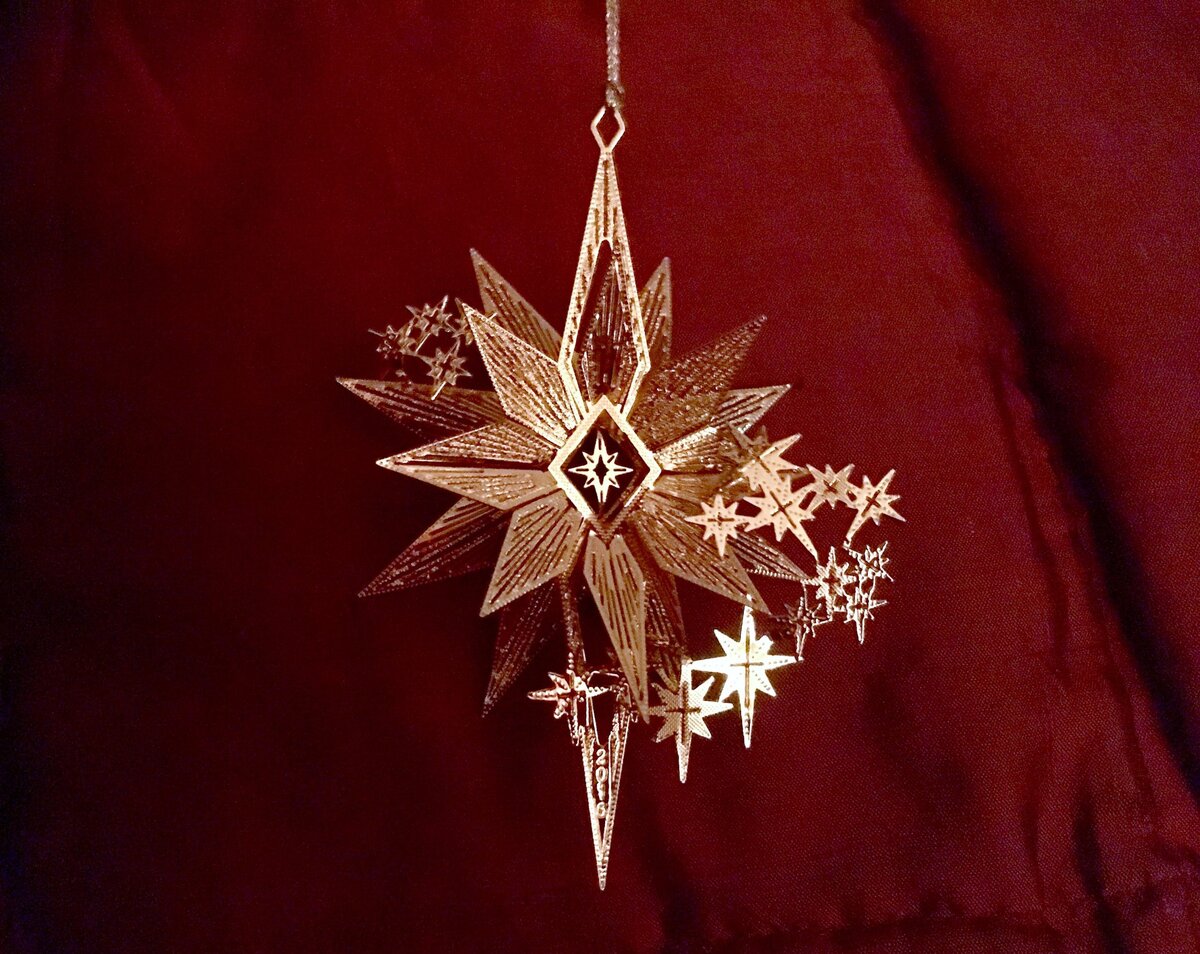


7 Then Herod secretly called for the wise men and learned from them the exact time when the star had appeared. 8 Then he sent them to Bethlehem, saying, “Go and search diligently for the child; and when you have found him, bring me word so that I may also go and pay him homage.” 9 When they had heard the king, they set out; and there, ahead of them, went the star that they had seen at its rising, until it stopped over the place where the child was. 10 When they saw that the star had stopped, they were overwhelmed with joy. 11 On entering the house, they saw the child with Mary his mother; and they knelt down and paid him homage. Then, opening their treasure chests, they offered him gifts of gold, frankincense, and myrrh. 12 And having been warned in a dream not to return to Herod, they left for their own country by another road. (NRSV)

- First, we all have our own North Star to guide us. It is our moral compass in how to navigate our journey. We need to be clear about the principles that guide us and set our sights on our goal and then be unwavering as we chose our path. That star may be our spiritual guide, our God, our belief system, our moral code, or our personal philosophy.
We all have our own North Star to guide us. It is our moral compass in how to navigate our journey.
- Second, we all bring gifts. We need to know what our gifts and talents are that we can offer the world. The (presumably 3) kings brought symbolic gifts of Gold, Frankincense, and Myrrh, commonly thought to represent the earthly self, God, and death. Humanity, heaven and earth. What gifts do you bring to this picture?
- Third, there is also a lesson of caution in this story about the morality of the rulers. Despite his attempt to feign care and respect, Herod had a hidden agenda that was based in fear and his personal goal to maintain his power. The simple communication of benevolence and respect does not make it so. Only acts of benevolence count and offer true respect.
The simple communication of benevolence and respect does not make it so. Only acts of benevolence count and offer true respect.
- Fourth, there is a glossy, sound-bite version of a story that does not adequately represent the harsh realities of the truth. When we celebrate Christmas, we think of the pretty manger scene that sits on our mantles or is recreated by the children in our churches. But the reality of that scene is that Mary wasn’t wearing a pretty baby blue gown. She was, more than likely, filthy. She’d endured weeks of travel and sleeping with barn animals. She was exhausted down to her bones. She and her husband were hungry, cold, and worried. It was not charming. Just like there is nothing sterile about war. No matter how we clean up the images so we don’t feel uncomfortable, buildings in rubble and empty streets hardly do justice to the injustice of invasion and genocide. It is horrible and bloody and terrifying. It is desperate. Like the live feeds coming from the few left in Aleppo, it is tragic.
- Finally, the Winter Solstice is the darkest day. And also a turning point. After December 21, our days will increasingly grow more light again. Enjoy them because we will inevitably cycle back to the darkness again. Hopefully, for the survivors of Aleppo, the evacuations made their pleas successful and they are safe. But we must all learn from the light shined on the reality of this loss of humanity.
